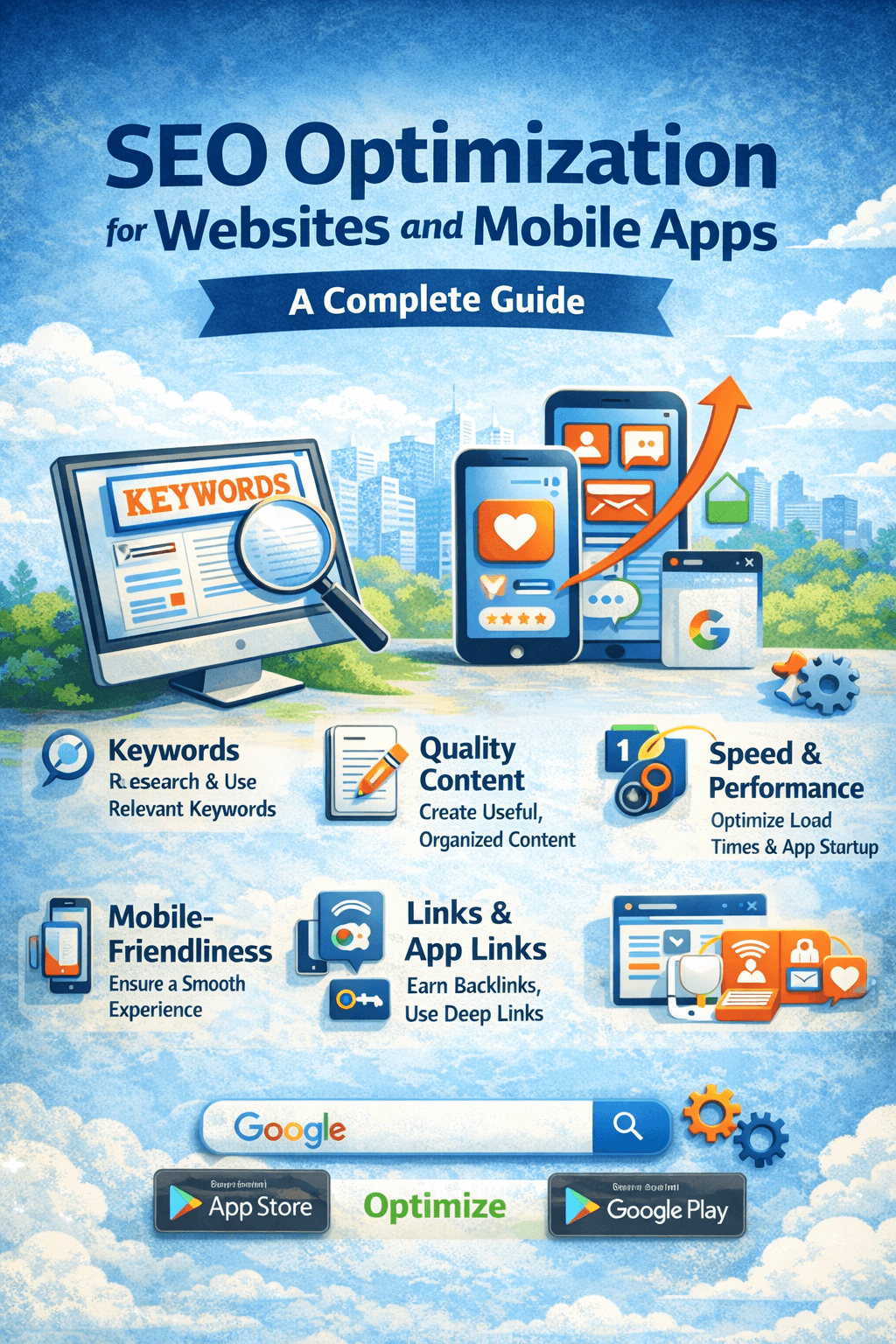
SEO Optimization for Websites and Mobile Apps: Simple Steps to Boost Visibility
February 2, 2026 · 7 min read
Modern DevelopmentWebsite OptimizationTechnical SEOApp AnalyticsUser Experience
Imagine your website or mobile app as a shop in a huge city. You could have the best products or features, but if no one can find you, all that effort goes unnoticed. That’s where Search Engine Optimization (SEO) comes in. SEO is a set of strategies that help your digital presence get discovered by search engines like Google or app stores like Google Play and Apple App Store. Here’s a practical, concise guide for optimizing both websites and mobile apps.
1. Understand Your Keywords
Keywords are the foundation of SEO. They are the words and phrases your audience uses when searching for content, products, or apps.
**Websites:** Use tools like Google Keyword Planner or SEMrush to find high-volume, low-competition keywords. Include them naturally in titles, headings, meta descriptions, and content without overstuffing.
**Mobile apps:** Include relevant keywords in your app name, short description, and app store tags. Focus on the first few lines of the description—they matter most for search visibility.
2. Create High-Quality Content
Content quality is crucial for search engines and user engagement.
**Websites:** Organize content with headings (H1, H2, H3), keep paragraphs short, and use images with descriptive alt text. Add internal links to related pages to keep users engaged.
**Apps:** Describe features clearly, include screenshots or short demo videos, and encourage user reviews to boost rankings.
3. Speed and Performance
Fast websites and apps keep users happy and improve SEO.
**Websites:** Optimize images, minimize scripts, and use caching and CDNs.
**Apps:** Keep your app lightweight, reduce heavy animations, and test performance on multiple devices.
4. Mobile-Friendliness
Most users browse via mobile, making optimization essential.
**Websites:** Use responsive design, ensure buttons and links are easy to tap, and avoid intrusive pop-ups.
**Apps:** Create intuitive navigation, ensure touch targets are large, and test on multiple screen sizes and OS versions.
5. Links and Discoverability
Backlinks and app links build credibility.
**Websites:** Earn links from authoritative sites through guest blogging or collaborations.
**Apps:** Use deep links, share app links on social media, and encourage positive reviews.
6. Monitor and Improve
SEO is ongoing. Regular tracking ensures your strategies are effective.
**Websites:** Use Google Analytics and Search Console to track user behavior and fix issues.
**Apps:** Use analytics platforms like Firebase or App Annie to monitor downloads, engagement, and retention.
7. Technical SEO
Technical aspects help search engines index your site or app efficiently.
**Websites:** Use HTTPS, submit XML sitemaps, and optimize URLs, meta tags, and schema.
**Apps:** Enable app indexing, use deep links, and optimize app store metadata for global reach.
**Conclusion**
SEO is about visibility, usability, and credibility. Websites benefit from good keywords, structured content, speed, and mobile-friendliness. Mobile apps thrive on discoverability, ratings, and smooth user experience. Continuous monitoring and improvements ensure your website or app reaches more users, keeps them engaged, and grows over time.