Building a Website: Picking the Right Architecture Without the Headache
February 3, 2026 · 5 min read
Modern DevelopmentSoftware DevelopmentCareer TipsSoftware Engineering
Think of your website as a house. The architecture is its blueprint, deciding how rooms are connected, how strong the foundation is, and whether it can handle a few extra guests without collapsing. Choosing the right setup early can save a lot of headaches later.
**Growing Without Breaking: Scalability**
Let’s say your website starts small, with just a few visitors. But one day, it goes viral and suddenly, hundreds or thousands of people are knocking at your digital door. If your site isn’t built to scale, it could slow down or crash.
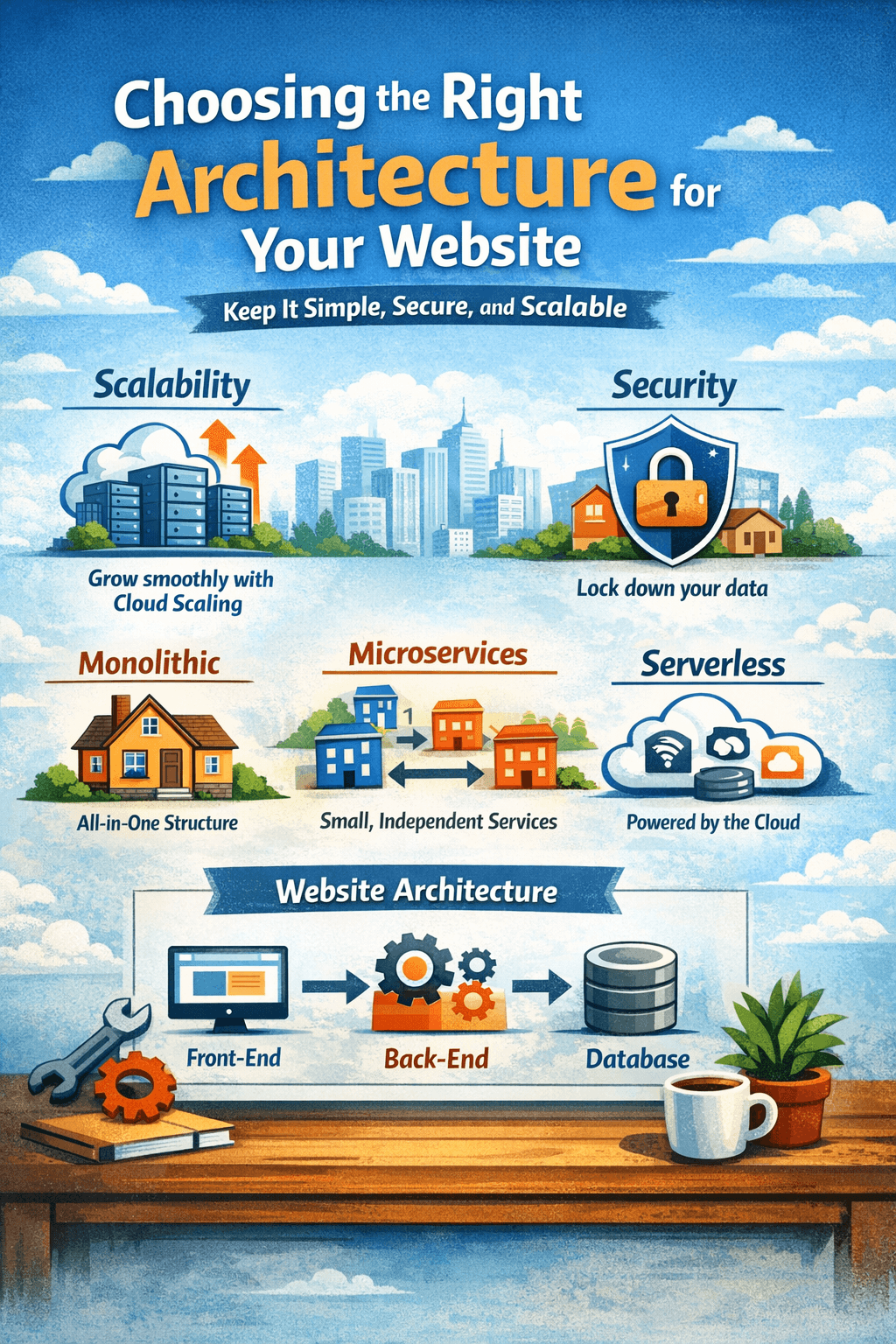
A smart architecture separates your website into layers: front-end (what users see), back-end (where the logic lives), and database (where data is stored). Each layer can grow independently. Need more power for your users? Just add another server. Cloud platforms like AWS, Azure, or Google Cloud make this as easy as flipping a switch.
**Locking the Doors: Security**
Security isn’t just a password. it’s a mindset. A solid website architecture protects your data and your users. Encrypt sensitive information, validate user inputs, and keep your software up-to-date. Think of it like locking every window and door in your digital house, not just the front door.
By building security into every layer of your site, you reduce the risk of hacks and breaches. This way, both you and your visitors can sleep more easily at night.
**Easy Fixes and Updates: Maintenance**
Websites aren’t “set it and forget it.” You’ll need updates, bug fixes, and new features. A clean, modular architecture makes this painless. When your code is organized and split into sections, you can update one part without breaking everything else.
For example, redesigning the homepage shouldn’t force you to touch the database or server logic. This saves time, reduces downtime, and keeps your users happy.
**Picking the Style: Monolith, Microservices, or Serverless**
- Monolithic: Everything under one roof. Simple to start but harder to grow.
- Microservices: Smaller, independent pieces. Easy to scale and update but more complex.
- Serverless: The cloud handles the servers. Easy to scale and maintain, but you rely on your cloud provider.
**The Takeaway**
The right architecture balances growth, safety, and simplicity. Start small if needed, but plan for growth. Keep security in mind, and structure your code so updates don’t turn into nightmares. A good architecture isn’t just technical; it’s the backbone of a smooth, secure, and future-ready website.